

Why Isn't Infinity Castle Streaming on Netflix?
Demon Slayer – Infinity Castle Part 1 makes its global streaming debut this month, exclusively on Crunchyroll. I ran the numbers on what Aniplex and Sony gave up, and why I think it was the right call
I love anime, you all know that.
But do you know what I love even more than anime? And I hope that I am not alone in writing this. Money! I like money a lot. I like earning money. I cannot seem to get enough of the stuff, and I am very confident in stating that if you’re running a business, you’ve got to be turning it over or you don’t have a business. Unless you are an AI-based start-up. You don’t need to be burning money in order to succeed in that business, or so it appears. I digress.
It should come as a surprise to absolutely no one that even this particular “entrepreneur” hates seeing money being left on the table when it comes to monetizing every opportunity available to you, if you are a licensee, partner, or distribution partner of a hit anime series or movie. I am not just talking about that basic human desire: greed. In the business of movie distribution, you operate like a starving chipmunk, hoarding chestnuts for winter. You literally never know where your next meal is coming from. You have to extract the maximum value from every investment to survive.
The world of a theatrical distributor is one of feast or famine. You may release ten movies in a single year (We call this a slate), with seven of them losing money and the other three earning enough dosh to keep you in business for the next financial year. When you have one of those rare, one-in-a-million breakout hits, and you are not correctly monetizing every opportunity presented to you from it, you could be doing something wrong. Or, in the case of Aniplex and Sony, you could be doing something very smart.


The Custodians
One of the perennial frustrations of my career in anime marketing and distribution is how Japanese rights holders were always prepared to leave money on the table if the deal I brought them didn’t guarantee protection of their custodial responsibilities and mission for that IP, which often could be as simple as brand stewardship. I think the Japanese entertainment and storytelling industry perhaps operates the tightest ship I can think of anywhere in the world when it comes to protecting the legacy of a story and its characters. And that approach, while conservative, has paid real dividends for some of the biggest names in manga publishing and anime production. Consider, for a moment, two of the biggest character brands in the world today: Dragon Ball Z and One Piece. Both IPs are managed and co-owned by Shueisha Publishing, the mangaka’s estates, and Toei Animation. They have been painstakingly managed over decades, and keen industry observers can highlight for you that their place in the pantheon of highest-earning IPs globally alongside Mickey Mouse, Spider-Man, and Pokémon (Don’t @ me. Pokemon is not a pure manga or anime brand, and it never has been), is as much to do with what they said no to as what they said yes to.
The Question
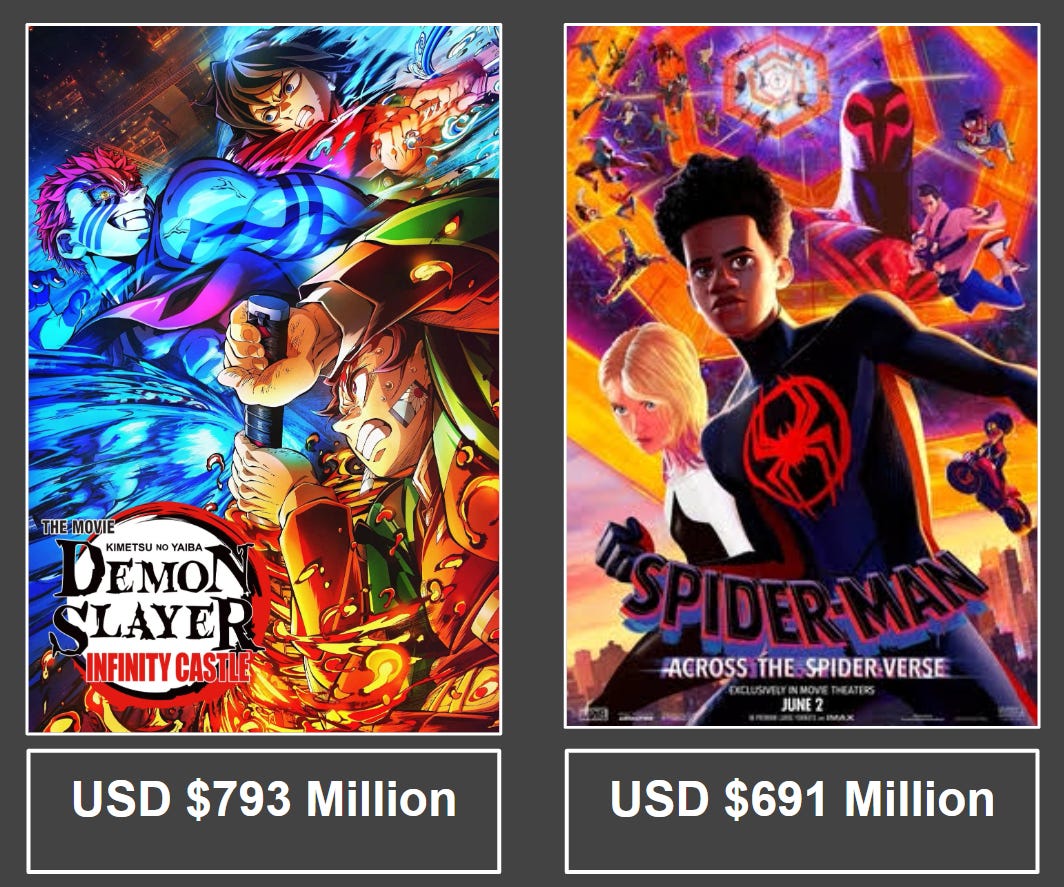
Taking all of this into account, I’ve been fascinated by a question since we watched Demon Slayer: Infinity Castle Part 1 become one of the top 10-grossing theatrical releases of 2025. It generated nearly $800 million globally, outperforming its sister company, Sony Pictures Animation’s Spider-Man: Across the Spider-Verse from 2023, which generated $690 million at the global box office. Infinity Castle actually surpassed Spider-Verse by 15%. Stay with me. The reason I am comparing the two will become apparent.
The question I have, and maybe I’m the only person asking it, is why Aniplex, the producer and rights holder for the Demon Slayer anime franchise, chose to launch the global first-pay streaming window with Crunchyroll, a global, dedicated anime streaming service with 21 million paying subscribers, rather than doing what their counterparts at Sony Pictures did with Spider-Verse and the rest of Sony Pictures’ theatrical output: an almost-exclusive first-pay window deal with Netflix.
I know Crunchyroll and Sony Pictures are two different companies, and that Sony Pictures’ exclusive first-pay output deal with Netflix doesn’t apply to Aniplex or Crunchyroll’s output. But it’s still a substantial money maker for the wider Sony Group, and I was genuinely surprised that the team at Aniplex and Crunchyroll chose to play Infinity Castle exclusively on Crunchyroll first, without a doubt in their minds. Crunchyroll got the first streaming window exclusively, but I’m sure that it will eventually make its way onto Netflix on a non-exclusive basis. This has been the pattern of release for series, as well as the 2020 Mugen Train movie, which is available in key territories on Netflix.
It’s also worth noting that, as of writing, no announcement has been made about where Infinity Castle will land for its first-pay streaming window in Japan. You may not know this, but that territory typically sees a 12-month holdback on streaming after theatrical. Infinity Castle Part 1 is still being exploited through digital rental, digital purchase, and physical media there. There’s a good chance it could go to Netflix exclusively in Japan for a couple of reasons. First, Crunchyroll does not operate in Japan, although I wouldn’t be at all surprised if it will be in the future, considering recent announcements about them launching in Taiwan and Korea. And secondly, Japan generated close to a third of the film’s global box office, and whatever deal gets done domestically is likely to be pretty generous, so I doubt that Aniplex won’t be seriously considering an exclusive 1st pay arrangement with either Netflix, Disney, or Amazon for that particular market.
So, why didn’t Demon Slayer: Infinity Castle go to Netflix exclusively for its first global pay-streaming window? Infinity Castle is a bigger hit than Sony’s own prior benchmark, Spider-Verse, which grossed about 15% less globally. Spider-Verse went straight to an exclusive Netflix pay-one window. Infinity Castle hasn’t. Same studio ecosystem, a bigger asset, but the opposite call, three years apart. What’s that about?
One Sony
Well, I don’t think it’s as simple as saying Sony chose Crunchyroll over Netflix. Aniplex and Crunchyroll drove this release top to bottom: Toho was the domestic theatrical distribution partner in Japan, but internationally, Crunchyroll worked with their sister company, Sony Pictures Releasing, which provided the distribution and financial servicing infrastructure for the film’s release. I think that partnership was a huge part of why the movie succeeded, probably one of the best examples I can think of in recent memory of internal company assets collaborating for maximum positive result.
When I worked briefly within the Funimation/early Sony-Crunchyroll global vertical, you were reminded virtually every day of the encouragement, from the top down, from Sony Group in Japan, for all these different businesses they own and operate, but which run as their own verticals, to find ways to work together. They called it the “One Sony” philosophy. It wasn’t heavy-handed pressure to work with each other, but we were always encouraged to learn as much as we could about each other’s businesses and make the best decisions for our projects based on that. Sometimes Japanese companies put out these big mission statements, three-year plans, five-year plans, ten-year plans, and you never see them amount to much. But I think the basis of a good corporate philosophy is discovering what your mission and values actually are and how you put them into practice. In a way, “One Sony” is almost a daily mantra for the group. Seeing it manifest into something this meaningful is genuinely remarkable. While it is a bit embarrassing to be seen lavishing praise on a former employer in this way, it is only fair to recognize excellence wherever it resides, and to give credit where it’s due.
So the correction I’d make to my own framing: Sony didn’t choose Crunchyroll over Netflix. It’s more accurate to say Infinity Castle likely never fell under the SPE-Netflix pay-1 deal at all, since that deal governs Sony Pictures Entertainment’s own theatrical slate; it doesn’t cover Aniplex or Crunchyroll releases. They’re under no obligation to go to Netflix first, and it’s worth stating plainly: this isn’t a snub to Netflix. I think this is Aniplex and Crunchyroll making a deliberate, independent platform-building bet. It’s also worth remembering that Aniplex is a stakeholder in the Crunchyroll/Aniplex joint venture, Hayate, as well as a very closely aligned sister company. It is fair to say that they’re directly incentivized to invest back into the platform however they can, because it pays dividends down the line. Which brings me to the next point: this looks like long-term strategy over short-term gain.
The Akira Lesson
Now let’s look at the math behind the “money on the table” case. But first, allow me to regale you with a personal anecdote that captures the whole dynamic.
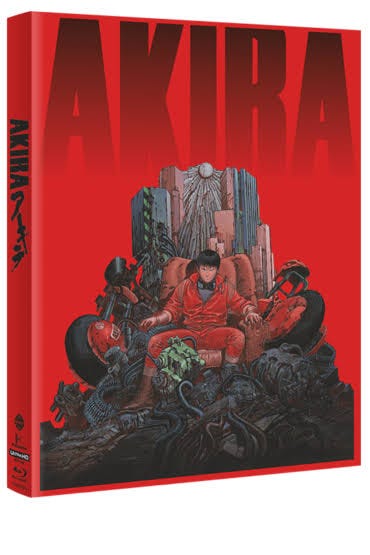
I’m an old Scrooge; I’ve always hated seeing missed opportunities and money being “left on the table”. When we released the Akira 4K UHD back in 2020/2021, we’d budgeted a certain amount of revenue for the UK and Ireland from the home entertainment release. We were working with Funimation and Madman Entertainment as the other English-speaking territory distributors, and it made sense to collaborate on special packaging, partnering with the US in particular, who’d sell a hundred times more units of a UHD steelbook than we would in the UK, bringing the cost of goods down for everyone.
We had plans for a standard UHD edition, a steelbook edition with a beautiful hard wraparound cover, and a super-deluxe ultimate edition, the kind of thing you’d sell as an exclusive direct-to-consumer pre-sale. That ultimate edition alone would probably have sold out before it even shipped, generating millions of dollars in revenue. The committee wouldn’t approve it. As I understood it, the overall copyright-owner and final arbiter of approval is Katsuhiro Otomo himself, Akira’s creator. He didn’t want a dozen different products flooding the market; he wanted one edition, with his stamp of approval, released globally.
If you have a copy of the 2020/21 4K UHD Blu-ray, you’ll appreciate the simplicity and beauty of the finished product. Elegantly packaged, carefully restored and curated, and understated. It celebrates the movie without loads of unnecessary bells and whistles. I don’t think it was ego that drove his final approval process. I think he knew simplicity was right, and he was happy with the edition he’d signed off on, maybe partly because he didn’t want to go overboard with a product we’d already sunk a lot of time and money into developing. Either way, it left real money on the table. That’s the frustration of loving anime, respecting the creators’ vision, wanting to protect the brand and be the best steward you can be, and then hitting a brick wall. Seeing an opportunity for more money, and not being allowed to take it because your values as an overseas brand custodian don’t line up with what the stakeholders back in Japan actually want is frustrating, but you won’t get far in the anime business if you constantly create friction, rather than going with the flow.
Doing the Math
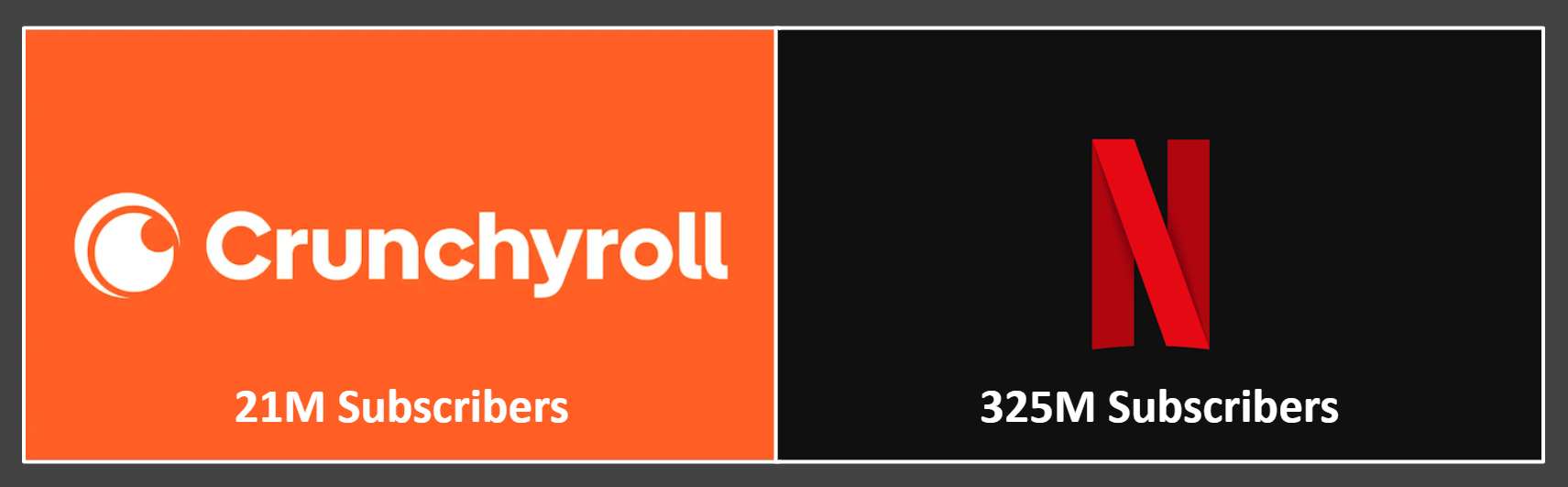
So let’s look at what Crunchyroll and Aniplex are giving up by keeping Infinity Castle exclusive to Crunchyroll for its first-pay window rather than going with a global partner like Netflix, which has 325 million paid subscribers worldwide compared to Crunchyroll’s 21 million. Netflix itself claims more than 50% of its subscribers watch anime regularly; that’s over 150 million households. Even a fraction of that dwarfs Crunchyroll’s entire subscriber base. That’s why, at first glance, this looks like a mistake to me, but I have been known to be wrong.
As a rule of thumb, there is an industry consensus, which may be out of date, that a player like Netflix might offer something like 10% of domestic (North American) box office as a license fee for exclusive rights, against Infinity Castle’s roughly USD $137 million domestic haul. That could eventually look like a sum between $13.5-$25 million for a global exclusive window. Do let me know if you think I am wide off the mark on this estimate.
I think that this might be a conservative estimate on my part when it comes to the exclusive global streaming rights, including Japan. You cannot underestimate the movie’s value in the Japanese market to both Netflix and Aniplex. Treat my estimate as a “back of a napkin” number. For obvious reasons, nobody discloses the actual percentage these deals run on. I can’t find a single Deadline, Variety, or Puck story that reports the real number, and two structural facts push against a flat percentage-of-global-box-office assumption: the Sony-Netflix rate card is reportedly indexed to US box office only (hence my projections above), and Infinity Castle’s US total is $131M, just 16.5% of its worldwide gross. Historical pay-TV output deals also used declining marginal rates as box office climbed, rather than a flat percentage. Regardless, I doubt that whatever the final estimates were, they would have been dismissed out of hand. It must have been a matter of intense internal conversation about the pros and cons of handing over exclusive first-window streaming rights to a third party.
Sony has a very close relationship with Netflix. Sony Pictures has an exclusive output deal with the streamer. It generates a lot of income for the studio, with both players extracting a lot of value from its partner. Perhaps K-Pop Demon Hunters is a cautionary parallel here? A different mechanism at play, but a similar lesson. Sony capped its own upside on what’s arguably Netflix’s biggest movie ever, via a cost-plus-25%-capped-at-$20M development deal, signed back when the possibility of a theatrical release was effectively dead. Reports suggest that decision occurred during the height of the COVID pandemic and subsequent lockdowns, which decimated the global box office, and which we can see some green shoots of recovery only five years later. The K-Pop deal is not the same deal type as a pay-1 streaming model, but it does show how Sony has a recent history of underpricing its own IP against Netflix. There’s a real tension there; I would have loved to be a fly on the wall inside Sony Pictures when they were deciding what to do with Infinity Castle.
Monopsony
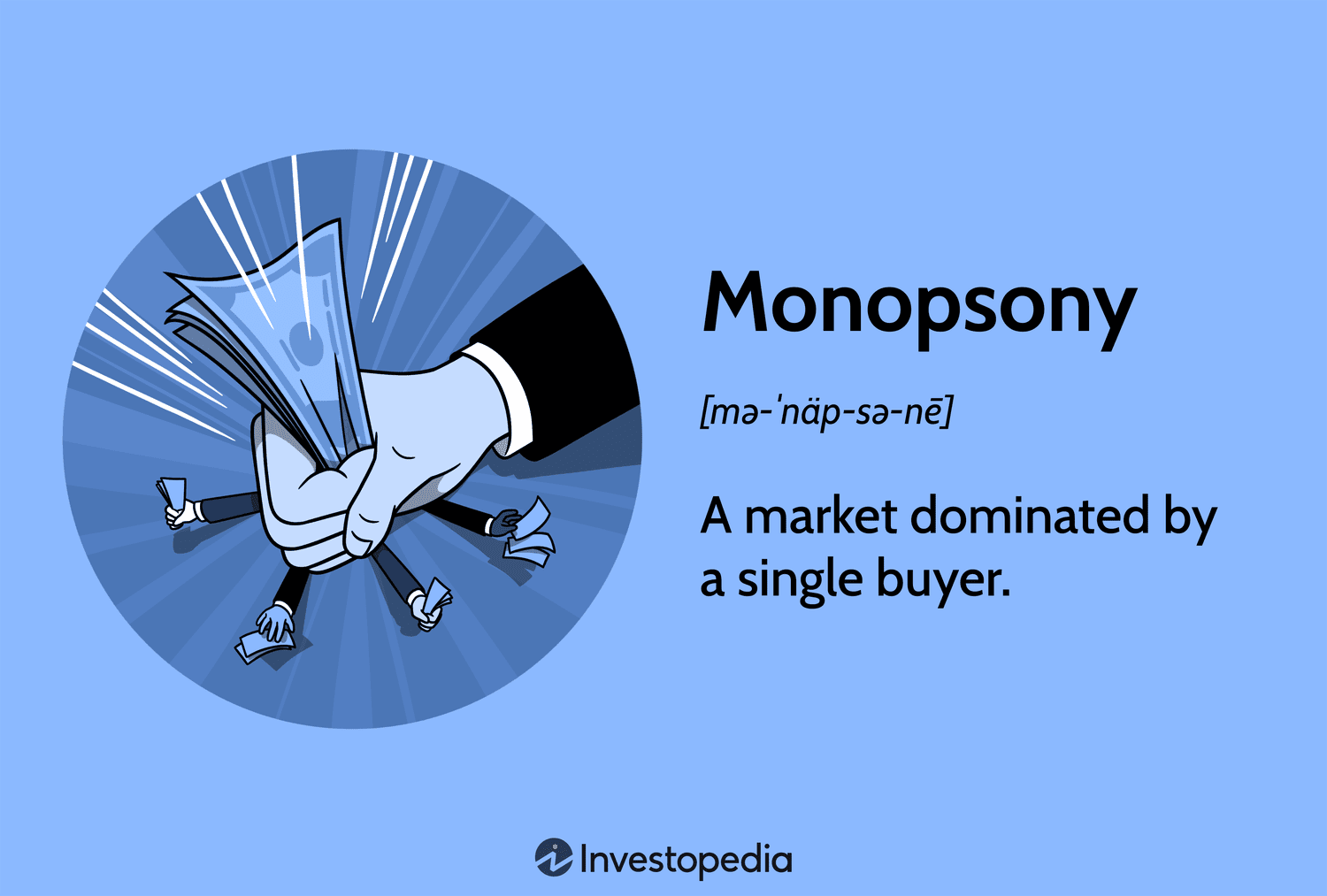
This is something I’ve written about before, and it’s being discussed widely: there’s growing concern within the Japanese anime industry that a monopsony has developed in the market for international anime content rights. Over 90 Japanese producers, via AJA (the Association of Japanese Animations), formally complained to Japan’s Agency for Cultural Affairs about Netflix’s flat-fee, no-royalty model. Toho’s anime chief, Keiji Ota, has publicly criticized single-platform exclusivity, and Toho’s recent acquisition of GKIDS and Europe’s Anime Limited hints at a future direct-to-market distribution route. Kadokawa is opening overseas offices to control licensing directly. That’s three separate major Japanese rights holders actively building around Netflix and Crunchyroll’s dominance in real time. It’s telling that the wider anime industry is concerned about how much control Netflix and Crunchyroll now have over pricing for the shows they’re making and selling.
It’s also worth noting that Crunchyroll and Netflix are customers of each other, as well as being seen as contributors to this monopsony issue. Neither company has publicly acknowledged the concern or addressed these observations, and I’d be confident they’d deny being a cause of any pricing control, so it’s worth treating that side of the argument carefully and fairly. That’s the paradox: on one hand, the general industry view in Japan is that a monopsony has developed and that Crunchyroll and Netflix are the primary drivers of it. On the other hand, Crunchyroll and Netflix are rival bidders for the same finite pool of anime rights, which is exactly the dynamic producers say is compressing prices, while simultaneously being counterparties in a $7 billion movie licensing relationship via Sony Pictures Entertainment. Same two companies: cooperative in one vertical, adversarial by proxy in another. It’s genuinely fascinating, and probably worth an analysis of its own.
The Mid-Tier Problem
As a small, indie, UK-based anime distributor, I never enjoyed seeing money left on the table, as my Akira story testifies. Anime production committees generally lock in their financing assumptions three to four years before a title goes to air, based on projected global minimum guarantee revenue. That means we’re all operating on a kind of false economy, investing money to produce shows we won’t deliver for years, based on what the market is paying for comparable rights today. None of us assumed prices would start falling for global content rights. The general assumption was that as domestic value declined, overseas audience and value for anime rights would keep rising, and buy-side demand for those global rights would cover the slack.
What a lot of producers are actually worried about now is that buy-side pricing power is compressing minimum guarantees specifically for mid-tier anime. The kind I’d usually grade a B-plus to A-minus if I were doing coverage for a client. Not the tentpole titles, not the big Shueisha/Shonen Jump adaptations that are guaranteed hits with a built-in audience of millions. Things feel genuinely out of whack for that segment right now.
The bread and butter of the anime industry is the mid-tier; it’s why so much of the industry exists at all. It’s easier to option adaptation rights for light novels and smaller titles; the big publishers are deliberately conservative about how many of their flagship manga series they adapt in any given year, because flooding the market with too many premium adaptations at once would devalue all of them. That drip-feed approach is probably wise. But committees have been budgeting against higher MG expectations for years, and that revenue isn’t materializing the way it used to. We’re going to see the knock-on impact of that: more studio closures, more consolidation among anime production and planning companies.
There could be a silver lining. Consolidation of the production apparatus might actually result in better working conditions, including improved pay, pension contributions, healthcare contributions, paid sick leave and paid vacation time, a five-day work week, and a more stable employment situation for animators generally. It could drive up freelance rates and commission fees too. I hope it does. It could also mean less content coming out annually, but what does come out could end up being held to a higher standard, which would be a good outcome too. Either way, this monopsony question really does seem to be making the wider anime industry nervous.
Cake and Eat It
In conclusion, I was wrong when I presumed that because Infinity Castle had become one of the Top Ten highest-grossing theatrical releases of 2025, it would invariably end up on Netflix exclusively, because the money would be simply too good to refuse. When it comes to building a robust and sustainable business for the future, sometimes other considerations are more important than an immediate payday. And when it comes to sustainability, perhaps the way that two Sony-owned companies, Aniplex and Crunchyroll, navigated their biggest success to date, while also managing one of their sister company’s most valuable partnerships, shows the rest of us that you can have your cake and eat it, on occasion.
The Accidental Otaku is Jerome Mazandarani- a specialist consultant, advisor & global strategist working within the anime and adult genre animation space. He’s also the Head of Anime at 8 Lions Entertainment, former MD of Manga Entertainment LTD, now part of Crunchyroll, LLC, and EP on Cannon Busters - a Netflix Original Anime.
As always, thank you for the insights, Jerome! I enjoyed reading, appreciated the personal experience example from the Akira release, and learned a new word in "monopsony". I have to embarrassingly admit that, for a second, I thought you were doing wordplay with "monopoly" and Sony (because of the One Sony context), but its definition is now perfectly clear and the concerns about it are understandable.
Above all, I appreciate your observation near the end about how a sustainable business, sometimes requires considerations beyond an immediate payday. The "win now, lose later" mentality that drives so many short-sighted decisions everywhere around us is scary, and I take it as a personal lesson for everyday life, as it's applicable to how we manage work, attention and time.
Warmest regards from Costa Rica!